
“We need to rediscover our pioneering spirit”

How is the transformation of the automotive industry influencing laser technology? Which future fields should photonics target, and how can European suppliers compete in the global market? – Prof. Thomas Graf, head of the Institute for Beam Tools (IFSW) at the University of Stuttgart since 2004 and most recently also president of the WLT – Scientific Society for Laser Technology, as well as the deputy head of the IFSW and holder of the Chair of Laser Technology in Manufacturing, Prof. Andreas Michalowski, provide answers in this interview. Michalowski conducts research at the Innovation Campus Mobility of the Future (ICM) on topics including AI and machine learning in laser processes—and has deep insights into trends and developments in automotive engineering.
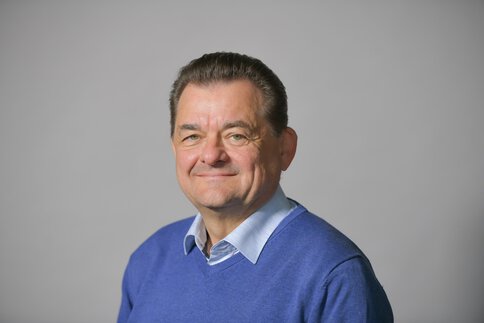
Prof. Graf, you have been Director of the IFSW for 22 years. What has particularly impressed you during your tenure?
Prof. Thomas Graf: The determined, successful transfer of scientific findings from laser technology into industrial developments here in Germany. That was ultimately the reason why I came here from Switzerland. From a laser technology perspective, this is where the magic happened, partly because science, industry, and politics are so closely intertwined. This transfer is not a one-way street: industrial challenges also feed into scientific questions—there is a fruitful push-and-pull interaction between science and industry. This was a very well-executed process that received strong political support, particularly in the 1980s and 1990s. The University of Stuttgart has institutionalized this dialogue through the Graduate School of Advanced Manufacturing Engineering (GSaME), established as part of the Excellence Initiative: Industrial partners regularly contribute questions from their research and development as doctoral thesis topics, which are then systematically pursued here in accordance with the quality standards of a university.
As WLT President, you were most recently at the forefront of the laser industry. How do you assess the prospects in Germany and Europe?
Graf: Although the WLT is an academic society with no industry members, its members maintain close ties with the business community in their respective fields. Laser technology has the advantage of being highly versatile. As a result, it is not currently suffering quite as severely as other sectors. The ongoing transformation of the automotive industry holds many exciting opportunities for laser applications, such as in the manufacturing of electric motors, batteries, and power electronics. The range of applications is thus becoming broader. And, of course, lasers are used far beyond the automotive industry. That is why I see continued strong prospects for the sector. However, neither academia nor industry can afford to rest on past successes. At times, I see a risk that the pioneering spirit evident at the turn of the millennium is losing momentum. We in Europe must rediscover this enthusiasm, recognize opportunities, and invest full steam ahead in new directions, rather than lamenting the increasing global competition.
Prof. Michalowski, how is the transformation of the automotive industry affecting your work at the InnovationsCampus Mobility of the Future (ICM)?
Prof. Andreas Michalowski: Very clearly! There is a distinct shift away from traditional drive components toward batteries, electric motors, and power electronics. This increasingly involves the laser processing of materials such as copper and aluminum, which raises new challenges for laser technology and process monitoring. At the same time, digitalization and sustainability issues are gaining importance. This opens up new fields of research. We need to work in a more interdisciplinary manner and incorporate future industry requirements into our teaching. The ICM is the ideal platform for cross-site, interdisciplinary collaboration between academia and industry, which rapidly translates new approaches and solutions into practical applications.
Can you explain one of these issues as an example?
Michalowski: Many laser processes in battery manufacturing take place at a relatively late stage in the process chain. Due to the preceding processes, the processed components are often already worth several hundred euros. At the same time, there are high demands on welded joints. If something goes wrong and a component is irreparably destroyed at this stage, the damage is significant. That is why reliable inline process monitoring and intensive quality management are essential. But by the time a defect is detected, it has already occurred. It is better to prevent it from the outset through highly robust, adjustable processes. If that fails, we need options for efficient repair. If a laser welding defect occurs, we must be able to return to the spot a second time and automatically correct the defect. This requires that we precisely monitor and document the processes.

Do laser applications in the production of batteries, fuel cells, and electric motors compensate for the processes no longer required for internal combustion engines?
Michalowski: Batteries, fuel cells, and electric motors involve a large number of welds and often have particularly high quality requirements. Laser processes will definitely play a central role here. When considering the entire value chain, the laser’s share in electromobility is likely even higher than in internal combustion engines. From a research perspective, laser-based manufacturing thus opens up a multifaceted spectrum of highly relevant questions with significant potential for industrial applications.
What role do artificial intelligence (AI) and machine learning (ML) play today and in the future of laser material processing?
Michalowski: ML and AI have the potential to take laser-based manufacturing to a whole new level. While modern machining systems already offer the ability to dynamically and time-dependently vary process parameters, this potential has not yet been anywhere near fully realized. This is primarily because physical models do not yet describe the interactions within processes with sufficient accuracy. Added to this is the size of the parameter space, which makes it difficult to realize this potential. At the IFSW, we have shown that ML algorithms require far fewer experiments—even in large parameter spaces—to identify optimal process windows. Combined with automated experiment evaluation, this paves the way toward self-optimizing systems that can independently find suitable parameter windows in a very short time. That is what we are working on.
Another research focus targets high-dimensional parameter spaces and combines data-driven models with the physical models that have been developed over the years. I see great potential in combining powerful ML and AI algorithms with physical models in hybrid approaches. The advantage is that, until now, obtaining the data required to train AI has required extensive experimentation. The hybrid approach is significantly more efficient because it leverages our prior knowledge to train the models. These models allow us to extrapolate, based on physical principles, into areas where no data is yet available...
…to arrive at optimal process parameters with very few experiments.
Michalowski: Exactly. I also see many potential applications in process monitoring and control. There, AI can draw conclusions about quality based on process signals captured by sensors. I suspect that laser machines of the future will build up comprehensive expert knowledge about processes by integrating adaptive models and will share this knowledge with one another. What a single machine learns during the process, it passes on to all the others. Such machines could then independently carry out not only manufacturing but also process development. They would thus be largely autonomous. My research at also addresses the question of whether such systems will surpass human understanding of processes and whether we will ultimately be able to learn from the machines. Based on the empirical knowledge of all the manufacturer’s laser systems, the machine could then process a wide variety of materials, alloys, and geometries flawlessly right from the start. In times of a skilled labor shortage, human expert knowledge is an expensive resource for industry with fluctuating quality that is repeatedly lost when employees leave.
Does the industry have reservations about AI-supported laser processes in mass production?
Graf: The vision just outlined is likely a key driver behind the industry’s openness to these solutions.
Michalowski: In fact, I see no hesitation whatsoever among our industry partners. There is very strong interest in the use of these methods. The key prerequisite, however, is reliability—especially when algorithms intervene in manufacturing processes. It must be ruled out that AI makes costly mistakes that go unnoticed or are detected too late. Given that companies today invest thousands upon thousands of working hours running through parameter sets, this openness is not surprising. There is nothing more tedious than standing at the machine day after day running through parameter sets. In the future, these hours can be filled with more exciting, productive activities.
Laser power is increasing. The first ultrashort-pulse (USP) lasers are delivering average power in the kilowatt (kW) range. How will this change laser material processing?
Graf: When it comes to CW lasers, we’ve actually been in the multi-kW range for quite some time now. And the first demonstrations of UKP lasers with kW-level power output took place several years ago, even though they’re only now hitting the market. Not too long ago, the prevailing view in the industry was that no one needed such power levels—partly because people didn’t know how to handle them. Fortunately, that’s history. However, I don’t expect the major disruption in this context to stem solely from the increase in power. It becomes more interesting when you take a closer look at the design of high-power ultrashort-pulse lasers. They are based on a small, low-power seed laser, whose beam then passes through a multi-stage amplification chain. What is important now is that this amplification works just as well for ultrashort and long pulses, or even continuous radiation. So it won’t take much longer to build a laser that can do everything from ultrashort pulses to continuous wave. We already have such demonstrators in operation. I expect that sooner or later, users will no longer have to buy different lasers for different applications, but will instead use highly flexible universal machines for a wide variety of processes. That’s not too far off in the future.
What are these universal lasers needed for?
Graf: One example is additive manufacturing. By combining different strategies with varying pulse durations and power levels during printing, it is possible to selectively remove material in each layer. This allows air vents, cavities, and channels to be incorporated into components much more precisely than is possible with recesses alone in selective laser melting. The printed component emerges from the system with finished final contours. But in general, all known laser processes can be combined. I see enormous potential here, as we can now manufacture things that were previously unthinkable. We will soon be publishing a study on such universal machines that combine multiple laser processes. In many cases, it makes ecological and economic sense to operate a single universal machine instead of, for example, three specialized machines, as this allows for better utilization of capacity. Especially since flexible power settings and strategies also enable processes to be run in parallel, thereby shortening processing time and preventing heat accumulation in the component.
What effects do you expect as a result of the power increases, Prof. Michalowski?
Michalowski: The very significant increase in power for systems with 50 kW and, in some cases, even well beyond that will open up new fields of application for lasers. So not only will it accelerate today’s processes, but it will also enable applications where laser technology was previously not economically viable or simply out of the question. In shipbuilding or heavy industry, high-power lasers can cut sheet metal several centimeters thick and replace conventional methods such as plasma cutting. Lasers with high average power are also suitable for processing very large surfaces, such as in cleaning processes or the structuring of large-format components. In tunnel construction or deep drilling, lasers could ensure that drills penetrate rock more easily and with less wear. And there will be many new applications that we cannot even imagine today.
Do you see other markets where photonics does not yet play a role but could gain a foothold through technological advancements?
Graf: Over the past few decades, laser technology has made inroads into all the main groups of manufacturing processes listed in DIN 8580—from primary forming and secondary forming to cutting and joining, all the way to coating and modifying material properties. There is still a great deal of potential in this area to gain market share and to replace and complement conventional processes. And there are industries where lasers are not yet represented at all. And production technology is, after all, just one of very, very many markets. The construction sector, agriculture, the food service industry, household and kitchen appliances, and many others will also increasingly use photonic solutions in the future. Increasing performance and flexibility, falling prices, and ever-simpler handling thanks to AI and ML are paving the way for lasers to new applications.
Michalowski: In my view, photonic computing—that is, the processing and transmission of information using light—is particularly exciting. There is still enormous development potential here with regard to energy-efficient high-performance computers and specialized AI hardware. The same applies to quantum computing. Photonic methods can be used to generate, control, and manipulate quantum states. And photonics is also the key to manufacturing integrated photonic components for sensor technology. This integrated photonics also promises enormous market potential—and is one of the most promising future fields for the photonics industry in Germany. Scalable manufacturing technologies are essential for producing these components in large quantities. Quantum sensors, for example, could enable navigation entirely without satellites, but to do so, they must become small, robust, and affordable.
The final question is for you, Prof. Graf. At the start of your career in photonics, did you have any idea how widely laser technology is used today?
Graf: Yes, though not in every detail. I was fascinated by laser technology—and its versatility was actually already well known during my studies in the 1980s and 90s. We saw disruptive opportunities. That was my main motivation for continuing to explore laser technology and steering my physics studies in that direction. My original idea of doing research in particle physics quickly became obsolete. Because laser technology, with its practical experiments and enormous potential, was much more fascinating. But Andreas, how did it actually happen for you? How did you get into laser technology?
Michalowski: It was more of a coincidence. I was working on optically detected nuclear magnetic resonance (ODNMR). This method is currently making a big impact in industry as a quantum technology. Back then, it was basic research and a lot of fun. But the path to practical application was still a long way off—and I wanted to work on more application-oriented projects. I shifted my focus toward lasers for production technology, and it was only then that I gradually came to understand just how broad the spectrum of laser applications is.