

A New Strategic Direction


Digitalization is intensifying global competition. When a cheaper option is just a few clicks away, established supply chains come under pressure—and this has long been the case in photonics as well. Distributors recognized this early on and are strategically realigning their businesses.
“We are transforming AMS Technologies from a pure distributor into a 360° service provider,” explains CEO and Managing Director Jan Meise. His company is increasingly designing and manufacturing customized, client-specific system solutions. He calls this expansion of the business model—which now includes consulting, development, production, and contract manufacturing—“Distribution Plus.” Meise explicitly does not want this expansion of the originally sales-focused business model to be seen as competition with the manufacturers of the systems and components used in these projects or as competition with the customers for whom AMS Technologies develops and installs the systems. “On the contrary, we remain a distributor—and in our expanded role, we open up access for manufacturers to markets and customers they have not previously reached. At the same time, we leverage our industry, product, and sales expertise to develop solutions starting from a quantity of one—solutions for which there was previously no market or which our customers had to develop in-house at great expense,” he clarifies.


The diversity of photonics technologies opens up lucrative niches
Other distributors are also currently realigning their strategies. Many proactively initiated this shift years ago. Digitalization is making markets and prices more transparent and reducing transaction times. This is also intensifying competition in photonics. With just a few clicks, purchasing departments can find the best deals worldwide and contact manufacturers directly. Established supply chains are coming under pressure. The going is getting tougher for pure distributors. Yet they recognize that they can better leverage their strength—market knowledge accumulated over decades—anyway. After all, in an industry like photonics, whose enabling technologies drive the progress of the modern world, there are plenty of lucrative niches.
Laser technology and optical processes have become indispensable in industrial manufacturing, clinics and research institutions, aerospace, agriculture, the energy sector, environmental technology, and food and pharmaceutical production.
At AMS Technologies, the focus is on niches between small-batch production and custom orders that do not justify automation or outsourcing to low-wage countries. While these are unattractive to major players, users without a background in photonics shy away from the complex development, integration, and assembly. “With our contacts and expertise, we can fill the gap,” says Meise. In this context, his company not only assembles components but also modular kits that can be easily adapted to the requirements of other customers. With a combination of certified manufacturing capabilities, experienced specialists with comprehensive expertise in optical technologies, thermal management, and power electronics, smart IT with end-to-end digital process chains, and experience in handling international shipments—including all customs formalities—the company offers, according to Meise, a comprehensive package that is rarely found in the market. Optical alignment alone is hardly feasible for contract manufacturers outside the photonics sector, not to mention the precision requirements and the complexity of the overall systems. Accordingly, he sees the strategic pivot as a major opportunity for his company: “We are driving a transformation at all levels: Our distribution business will continue to grow, and we are increasingly leveraging the expertise we’ve gained to advise our customers, support them in technology development, and assemble complete systems. Digitalization is the key to making this know-how available and efficiently usable for the benefit of our customers,” he explains. Instead of staring like a rabbit at the “digitalization snake,” AMS Technologies is leveraging its potential for a comprehensive growth strategy.
Market consolidation and generational change recognized as an opportunity
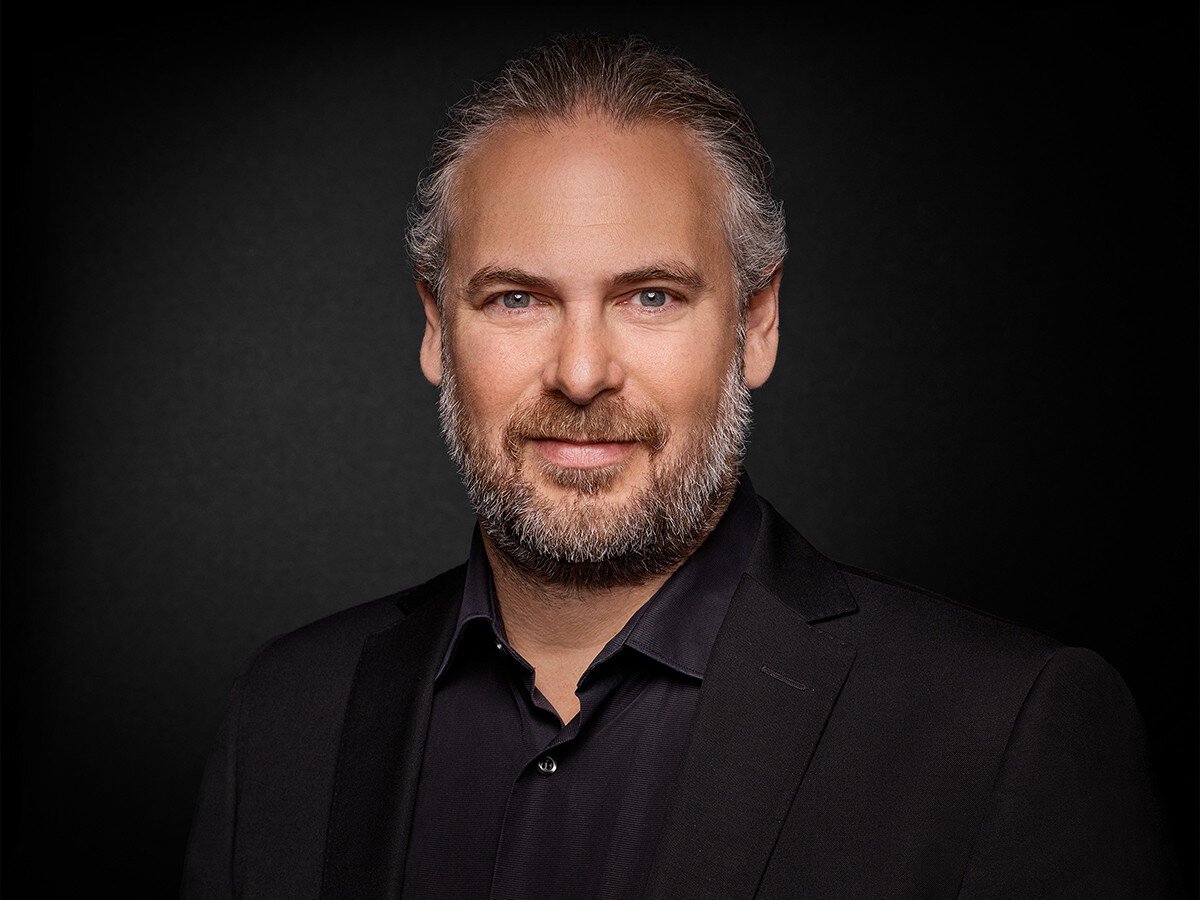
Patrick Paul is the CEO of the Laser Components Group and of PHOTONA GmbH, which was founded in 2021. The company’s founding is part of a comprehensive strategic realignment that is ultimately due to the group’s success. The company, founded in 1982 by Paul’s father, had outgrown its existing structures with foreign subsidiaries in the U.S., Canada, and the U.K. The auditor recommended a complex consolidated financial statement and the establishment of a holding company. At first, Paul resisted the idea. But he soon recognized a wealth of opportunities in it. “I was the only one in the group who knew all the processes, goods, and financial flows within the group,” he says.
A new structure could change that and, at the same time, bring the finances and the varying levels of quality management at the global production sites up to the same standard. The Canadian subsidiary was already supplying components to the automotive industry and was further ahead than other sites in terms of quality. To standardize the quality philosophy, the company appointed a Global Head of Quality. This professionalization spread to other areas—and then it dawned on Paul and his team: they weren’t the only ones. “In photonics, many companies worldwide trace their roots back to my father’s generation of founders. They are 20 to 40 years old, highly specialized, profitable, have a solid customer base, but remain under the radar of investors,” he reports. These small companies, led by tech-enthusiast founders, all face the same challenges: business processes, sales, IT structures and security, and quality management all require modernization. Yet the aging owners shy away from the effort. Succession plans are often nowhere in sight.
A true success story to start things off
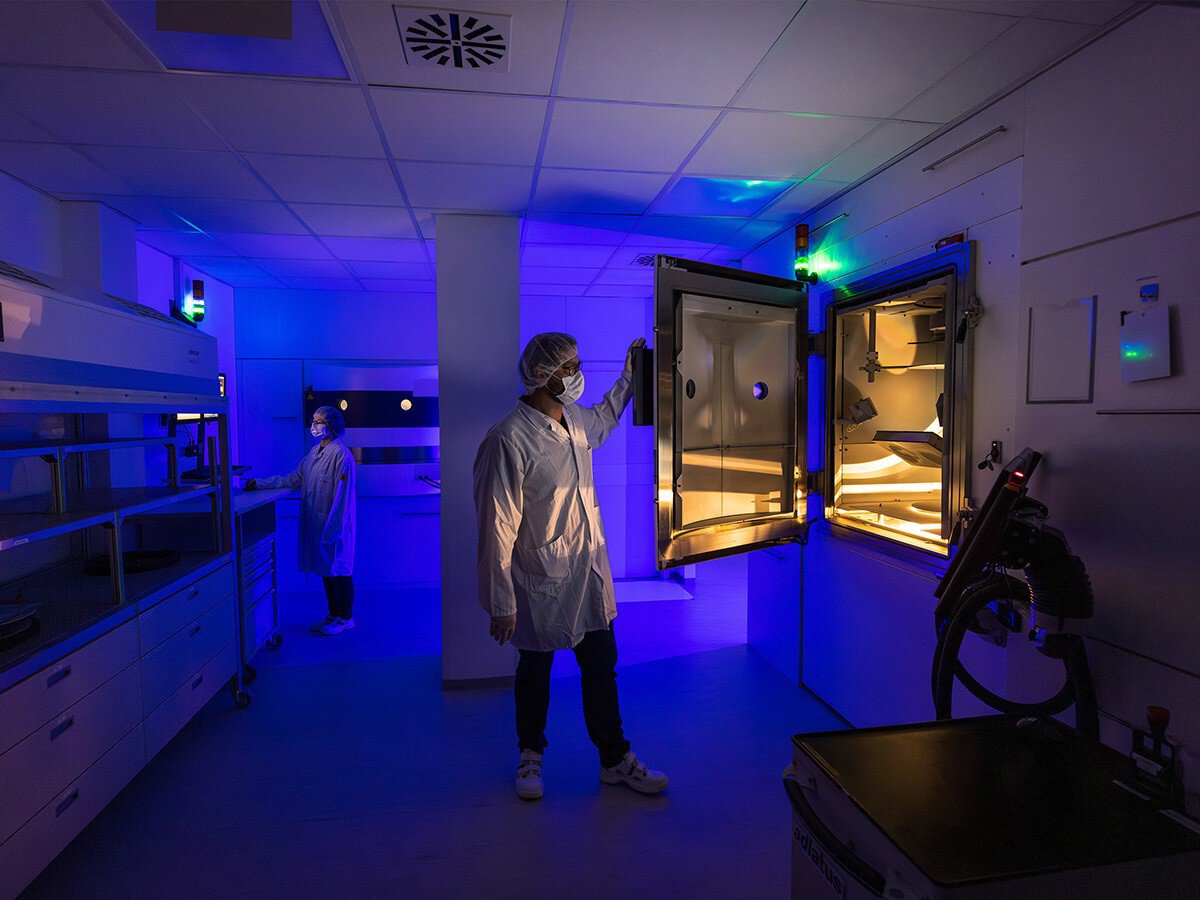
With the newly established, highly professional structure of PHOTONA GmbH, the Pauls Laser Components Group offers such companies a promising future. It invites companies to join its holding company and seeks to do so through equity investments or acquisitions. “Last year, we made our first acquisition—and it has been so successful that we want to continue down this path,” he reports. The parties were already familiar with each other from joint projects, agreed on a purchase price, and Paul’s team immediately initiated the long-overdue modernization. Since then, the company has been growing, hiring new employees, and planning further expansion. “With the PHOTONA management team, we have a quick-thinking group that restructured the financing, modernized the IT systems, and implemented our quality philosophy in no time,” explains Paul. Employees can now focus on development and manufacturing. The holding company handles the rest, leveraging synergies resulting from its own modernization process. At the same time, the new subsidiary benefits from the expanded global sales structure. “They’ve already introduced themselves to all sales teams worldwide, which has led to a noticeable increase in inquiries,” he reports. It’s not the only positive surprise. The company had technologies in the pipeline that Paul and his team knew nothing about. “The employees weren’t aware of what these could be used for, because some of them had been shelved years ago,” he says. Now they are working on polishing and marketing these “rough diamonds.”
Throughout its nearly 45-year history, Laser Components has driven steady diversification around its core pillars. From being a pure distributor in the early 1980s, the share of in-house products and solutions initially rose to ten percent in the 2000s. Today, according to Paul, it stands at over 60 percent. This strategy is now paying off in an era of digital market transparency. “No one is afraid to order directly from manufacturers in China anymore,” says Paul. Information and data sheets are available, and there are every conceivable communication channel, translation tool, and AI. The pure distribution business model is reaching its limits. The proactive realignment, which Günther Paul had already initiated, gives today’s management room to maneuver for their expansion plans.
Decentralization and customer focus
Marcel Pabst, CEO of Laser 2000 GmbH, has also initiated a strategic realignment that the company is now consistently pursuing. “A key element is the systematic decentralization of our sales operations,” he explains. Having a direct presence in each region fosters closer customer relationships and allows the company to respond more quickly to inquiries. “But proximity to the customer not only improves communication; it also enables us to act proactively by gaining early insights into market trends,” says Pabst. One goal is to better understand the specific requirements and dynamics of individual markets in order to address them more effectively.
Laser 2000, too, no longer sees itself as a mere distributor, but as a solution provider offering its customers customized solution packages precisely tailored to their respective applications. A common language is essential for efficient, collaborative partnership—both in a technical and cultural sense. That is why Pabst and his team are driving organizational and structural development. The company has established new branches in Italy and Sweden, strengthened its partnerships in the UK and Benelux, and positioned teams from northern Germany to Austria closer to customer locations. Short communication channels, direct communication, and a heightened focus on service have recently led to a significant increase in customer visits. This often involves providing support. Laser 2000 is building a network of Photonics Advisors—experts who possess a deep technological understanding, maintain close contact with photonics manufacturers, and provide advisory support to the company’s own sales teams for complex applications that require detailed explanation. Combined with four decades of experience in sales and order processing both domestically and internationally, this has created a fast and effective structure, according to Pabst. Distribution remains the core competency, but it is embedded in a solution-oriented, knowledge-based, and market-specific organization that engages in continuous dialogue, scouts for technology trends in all regions, and thus identifies market potential at an early stage. Laser 2000 acts as a connecting element between manufacturers and users, translating its suppliers’ technological expertise into concrete applications for customers. Pabst succinctly summarizes the strategic approach: “For us, it’s all about connections—between people, markets, and technologies.”