

"Lasers will be ubiquitous in technical infrastructure"

Technological advances have made lasers attractive for an ever-increasing number of markets and applications. In our PHOTONICS-Interview, Trevor D. Ness, Senior Vice President and Chief Revenue Officer of IPG Photonics Corp., traces this development and looks toward a future in which lasers will be so ubiquitous that hardly anyone will even talk about them anymore. This poses new challenges for their manufacturers. He also sees new ethical questions arising for the industry due to increasing dual-use of photonics.
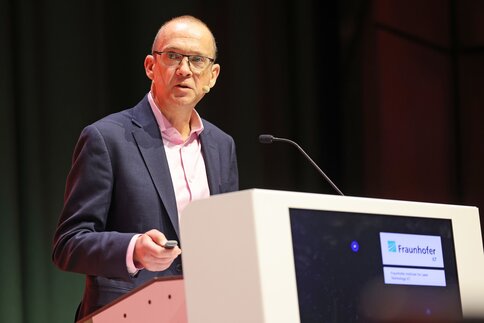
Since September 2025 you have been IPG`s Senior Vice President and Chief Revenue Officer with responsibility for leading all global commercial functions. If you should describe the current state of laser technology—what would your assessment look like?
Trevor D. Ness: Of course, my perspective is shaped by my role at IPG Photonics. We’ve driven continuous fiber laser innovation since the 1990s and we have enabled a huge amount of performance and scalability in both fiber lasers and pump diodes. Ongoing diode laser advancements have continued to drive increased power output and energy efficiency, while decreasing costs and form factors. We have been enabling this value proposition for our customers year over year. The advances in cost, performance, and scalability have had a massive impact on the laser industry and the application of lasers.
In what ways?
Ness: Lasers have increasingly penetrated industrial markets, triggering rapid growth. This began with laser marking, continued with laser cutting, and is currently having a major impact on industrial welding processes or, more recently, on the cleaning and de-rusting of surfaces. In addition to the significant increase in power, it was cost efficiency and increasingly simple handling that contributed to the breakthrough of fiber lasers even in demanding applications in the automotive and consumer electronics industries. New approaches to beam shaping, mode control, and image processing—for example inline weld seam monitoring—have made laser processes increasingly reliable, which is important for safety-critical applications as well as for many processes in which lasers weld dissimilar materials. Currently, we are seeing a trend toward handheld welding lasers, which is opening up laser technology to the masses and to industries that never used lasers before. The range of applications is broadening and, thanks to integrated system solutions combining lasers, optics, monitoring, and software, is also becoming increasingly sophisticated.
How are fiber lasers succeeding in replacing established processes?
Ness: The rapid displacement of CO2 lasers was initially productivity driven. High power fiber lasers enable higher cutting speeds and thicker materials to be cut. We routinely make lasers today that are 60 kW+ and the optics that go with them. They are enabling the new frontier of cutting, where we displaced incumbent technologies like plasma. Optimized focusing as well as high power density enabled the cutting of highly reflective materials which was considered impossible with fiber lasers. Today, we are routinely cutting aluminium, copper and brass. And in high-speed cutting, cutting heads, sensors, and image processing systems work together to optimally control the processes.
You mainly mentioned technological drivers. What about the costs?
Ness: High power outputs and ever-improving performance are one side of the coin; on the other is the declining cost per watt—lasers are becoming ubiquitous. Fabricators are closing labor gaps. Laser cleaning and heating are driving a sustainable future. We have favorable economics to displace traditional degreasing and rust removal applications. After around 2.000 years laser heating has potential to replace conventional convection ovens. We have our products deployed in e-Mobility, in the food and beverage industry, and in the coatings industry, where we are replacing conventional gas ovens.
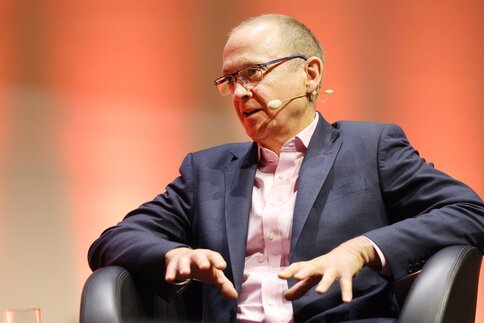
What processes are we talking about?
Ness: Degreasing, rust removal, surface functionalization and texturing, as well as any drying and heat treatment processes. Also, medical diagnostics such as Dual-Comb-Spectrometers that promise point-of-care breath analysis for low-cost-diagnosis outside of the traditional healthcare environment. We are also pushing towards much shorter wavelengths. Precision processing and below 10 µm spot size open up a whole new world of applications: For instance, new deep-ultraviolet capabilities are opening opportunities in advanced scientific applications, including next-generation timekeeping and quantum technologies – some of the new emerging and breakthrough applications in the laser world.
What do you see when you extrapolate this overview into the future?
Ness: We’re already entering the next phase of laser adoption with ubiquitous, increasingly intelligent embedded laser functions. The revolution has already begun. These laser systems are smart, AI-enabled, and are becoming mobile on robotic platforms. They become scalable, low cost, high volume.
What does that mean specifically?
Ness: Think of humanoid robots. If we integrate lasers into them, laser processes will become mobile and deployable in places where humans reach limits—whether it’s repairs to nuclear facilities, extraterrestrial, or offshore infrastructure. Working together, humanoid robots and lasers can automate skilled labor. So, the laser becomes the robot’s tool. I’m convinced that we’ll see countless new applications. For people with disabilities, exoskeletons and robots are already having a transformative impact in some cases.
That sounds very positive. But the reality in Ukraine also shows that photonics is becoming increasingly interesting for military purposes as well…
Ness: You’re right. Many photonics technologies have legitimate applications in both civilian and defense markets. This dual-use reality provides significant opportunity, but also important responsibilities for our industry.. Directed-energy systems have the potential to provide a cost-effective means of defending against certain low-cost threats. In future there will be increased integration into different platforms.
Let’s return to civilian applications. What do your findings on the ubiquity of lasers mean for manufacturers?
Ness: I believe that lasers will become increasingly embedded in industrial infrastructure, data centers, hospitals, and energy systems. The most successful laser applications are going to be the ones that we will not notice. They are going to be ubiquitous in everyday life. The next breakthroughs are unlikely to come from physics alone, but how do we apply it. We spent a long time trying to solve some hard problems: we have made lasers more powerful, more efficient and increasingly usable. The journey from building blocks to systems enabled the laser growth that we have seen over the last thirty years. But I would suggest that the most interesting question today is what happens when lasers are no longer the constraint. As power becomes more readily available, costs continue to decline and integration becomes simpler, the limiting factor increasingly shifts from the laser itself to how and where we choose to apply it.
And what is your answer to this question?
Ness: The laser is evolving from a standalone tool to a component within comprehensive solutions with AI capabilities. In combination with humanoid robots, it becomes mobile, which will significantly transform the nature of work in the coming decades. In addition, we are entering a dual-use reality. The same characteristics, that made lasers powerful for industry–precision, efficiency and scalability–are now making them relevant in defense. That creates opportunity but also responsibility. Lasers will be part of invisible infrastructure in manufacturing, in communications, in defense, in diagnosis and treatment of diseases. Perhaps the ultimate sign of success will be that when lasers become so integrated and reliable, we stop talking about them entirely.